10 hr
Full-Day Lovech, Devetaki Cave & Krushuna Waterfalls Adventure
- Expert local guide
- Small group
- Skip-the-line access
- Free cancellation
Devetaki Cave & Krushuna Waterfalls — Bulgaria's Hidden Natural Corridor
Paleolithic chambers meet travertine cascades, two ecosystems in one daylight route
Compare fares, pick the fit — all bookings are mobile-voucher and eligible for free cancellation where shown.
10 hr
9 hr
9 hr
| Experience | Duration | Rating | Skip-the-line | Guide | Small group | Free cancel. | Price | |
|---|---|---|---|---|---|---|---|---|
|
Guided Experience
Most popular
Full-Day Lovech, Devetaki Cave & Krushuna Waterfalls Adventure
|
10 hr | ★ 4.7 | ✓ | ✓ | ✓ | ✓ | €95 | Book → |
|
Guided Experience
Krka National Park Day Trip with Boat Ride from Split
|
9 hr | ★ 4.8 | ✓ | ✓ | ✓ | ✓ | €30 | Book → |
|
Guided Experience
Mekong River Cruise to Pak Ou Caves & Kuang Si Falls
|
9 hr | ★ 4.8 | ✓ | ✓ | ✓ | ✓ | €45 | Book → |
Worth it for nature lovers and photographers
A devetaki cave and krushuna waterfalls tour delivers exceptional value at just 3 BGN per person. The cave spans over 2 kilometers with seven colossal entrances—some reaching 35 meters high—offering a geological spectacle few Bulgarian sites match. Natural light floods the chambers through massive openings, eliminating the need for artificial illumination and creating dramatic contrasts perfect for photography. The adjacent Krushuna cascade system adds a complementary water element within a 15-minute drive, making the combined route efficient for a half-day excursion. The low entrance fee (conservation contribution) keeps this accessible compared to commercialized cave systems elsewhere in Europe. Photographers benefit from the golden-hour light streaming through the main portal between 08:00–10:00, while the bat colony and archaeological layers appeal to wildlife and history enthusiasts. The modest infrastructure means you experience raw karst formations without guided tour constraints, though signage remains minimal.
Bottom line: The devetaki cave and krushuna waterfalls tour combination offers rare geological scale at a fraction of typical European cave tour prices, justifying the trip for anyone valuing natural formations over polished tourist infrastructure.
Hand-picked experiences loved by thousands of travelers
1 to 1.5 hours
Free Cancellation
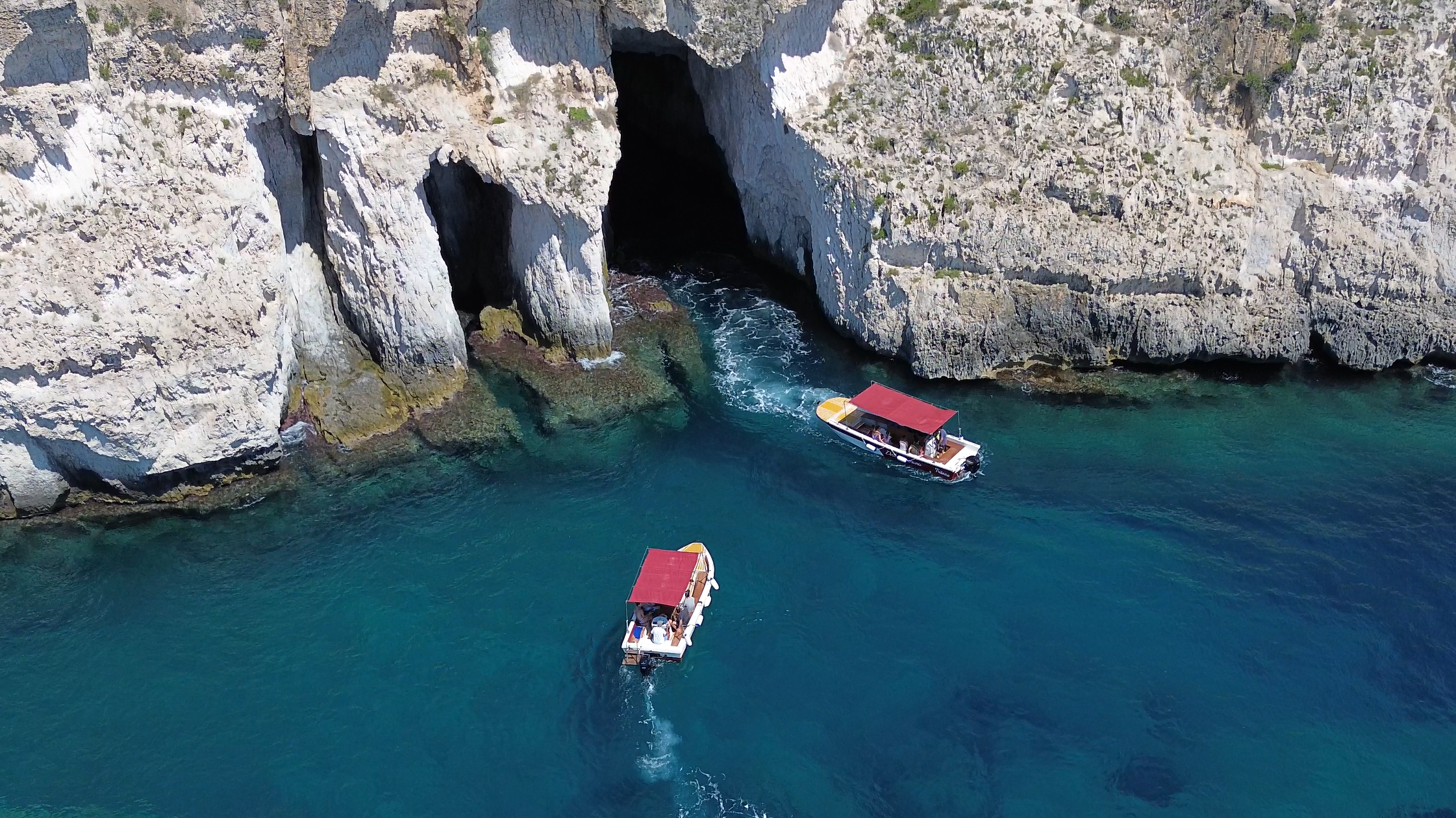
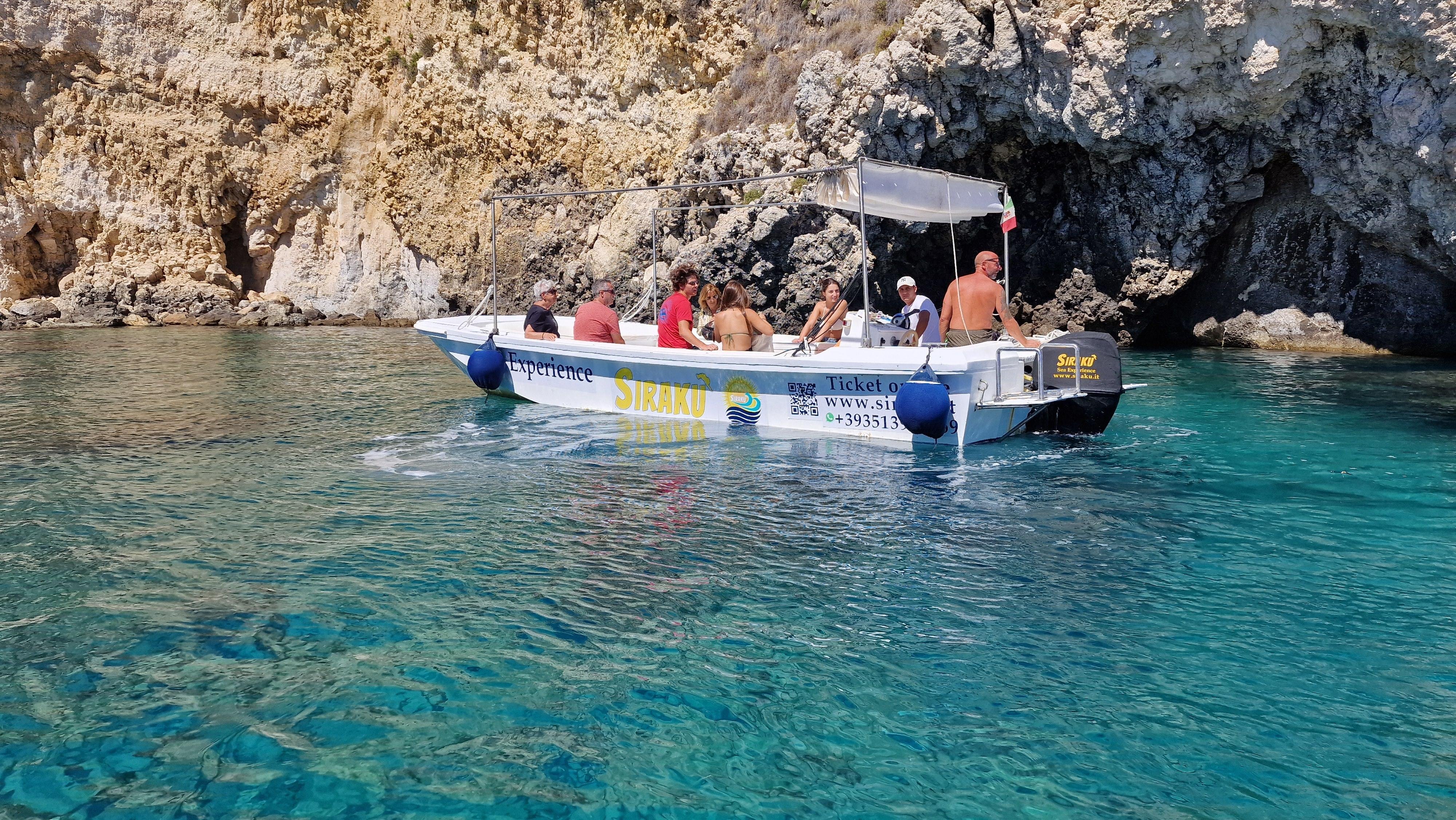
Cruise around Syracuse's historic island, venture into stunning marine grottoes, and swim in crystalline waters
7.5 hours
Free Cancellation
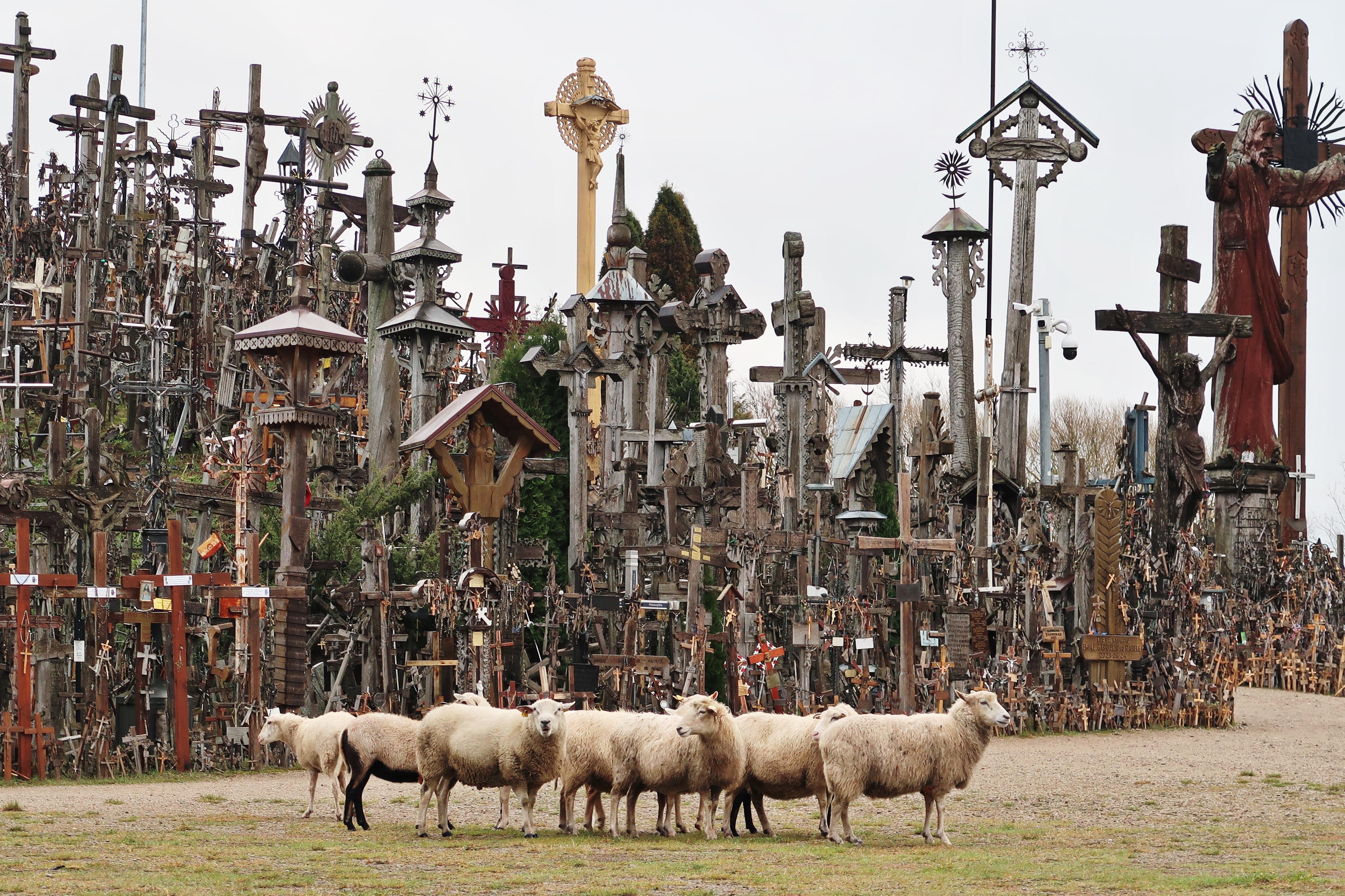
Cross borders on a spiritual journey to Lithuania's iconic pilgrimage site with scenic stops in historic Jelgava
5 hours
Free Cancellation
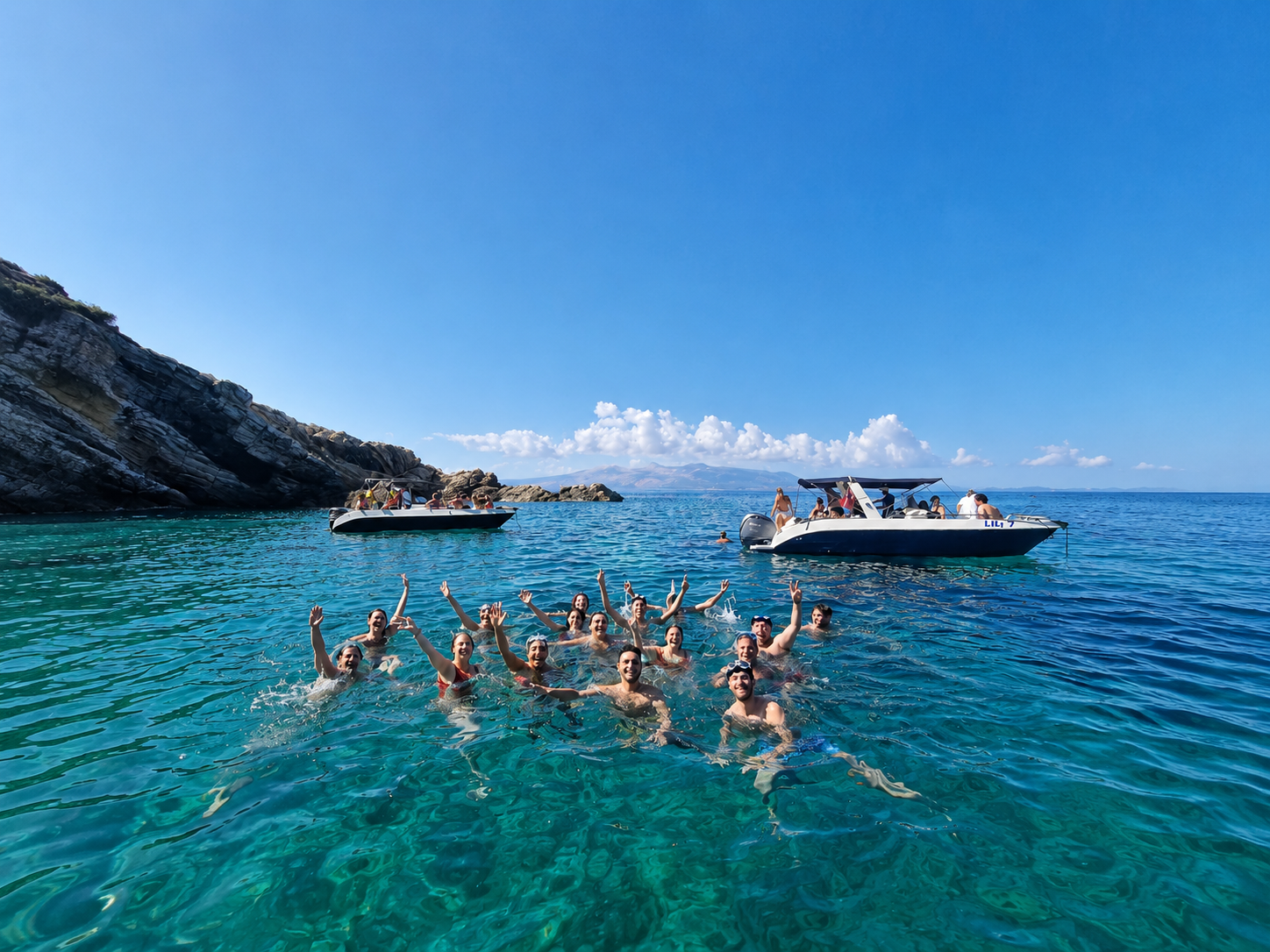
Five-hour voyage to six pristine locations along Albania's stunning coastline, including hidden grottos and secluded shores
1.5 hours
Free Cancellation
Sail Syracuse's turquoise waters, explore limestone grottoes, and snorkel with sparkling wine in hand
5.5 hours
Free Cancellation
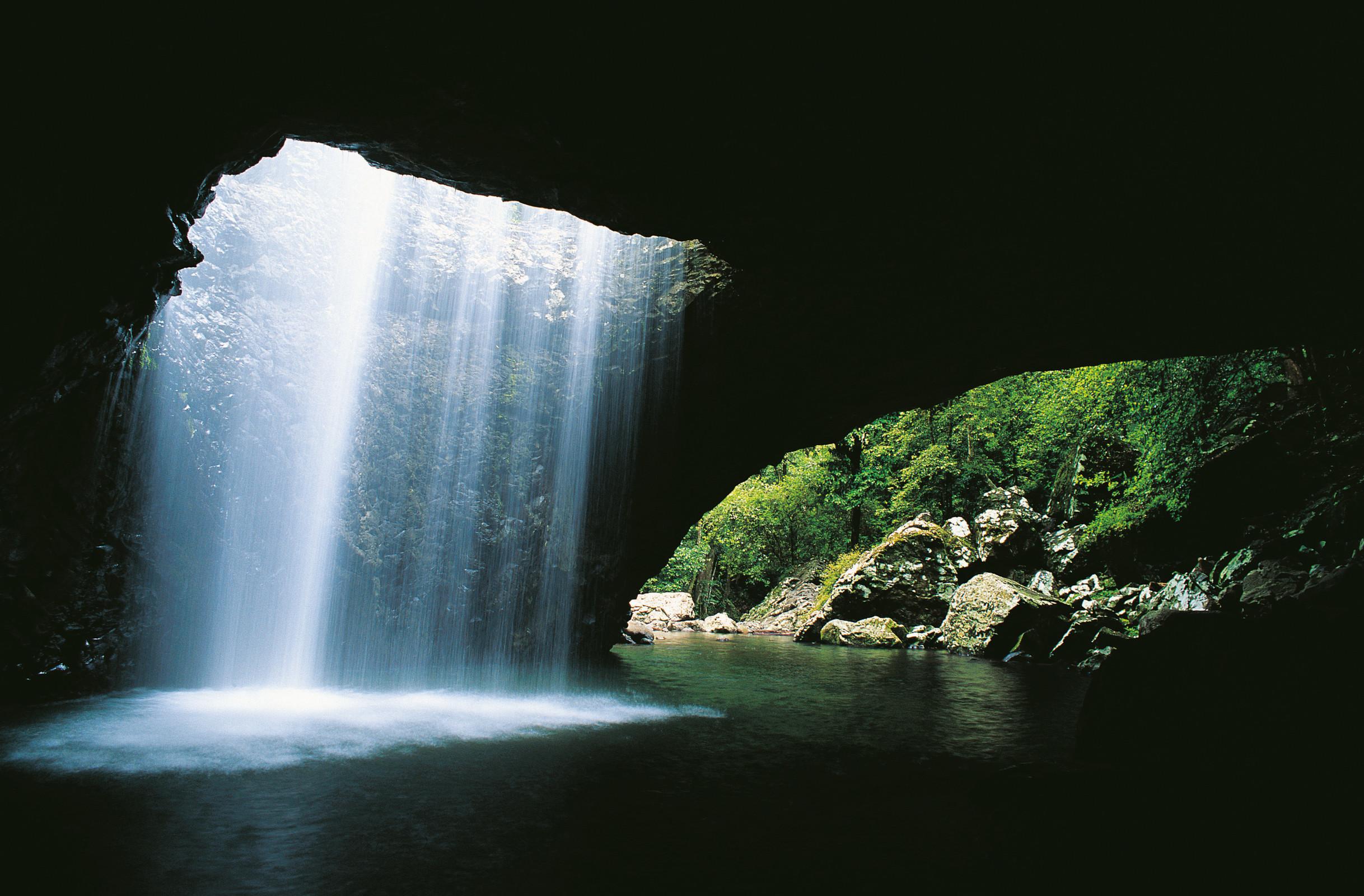
Discover ancient rainforest, cascading waterfalls, and unique cave formations on this scenic Gold Coast escape
5 hours
Free Cancellation
Sail the Ionian Sea to secret coves, turquoise caves, and pristine shores along Albania's stunning coastline.
2.5 hours
Free Cancellation
Discover Budapest's hidden underground world with expert guides on this adventure through two remarkable cave systems.
5.5 hours
Free Cancellation
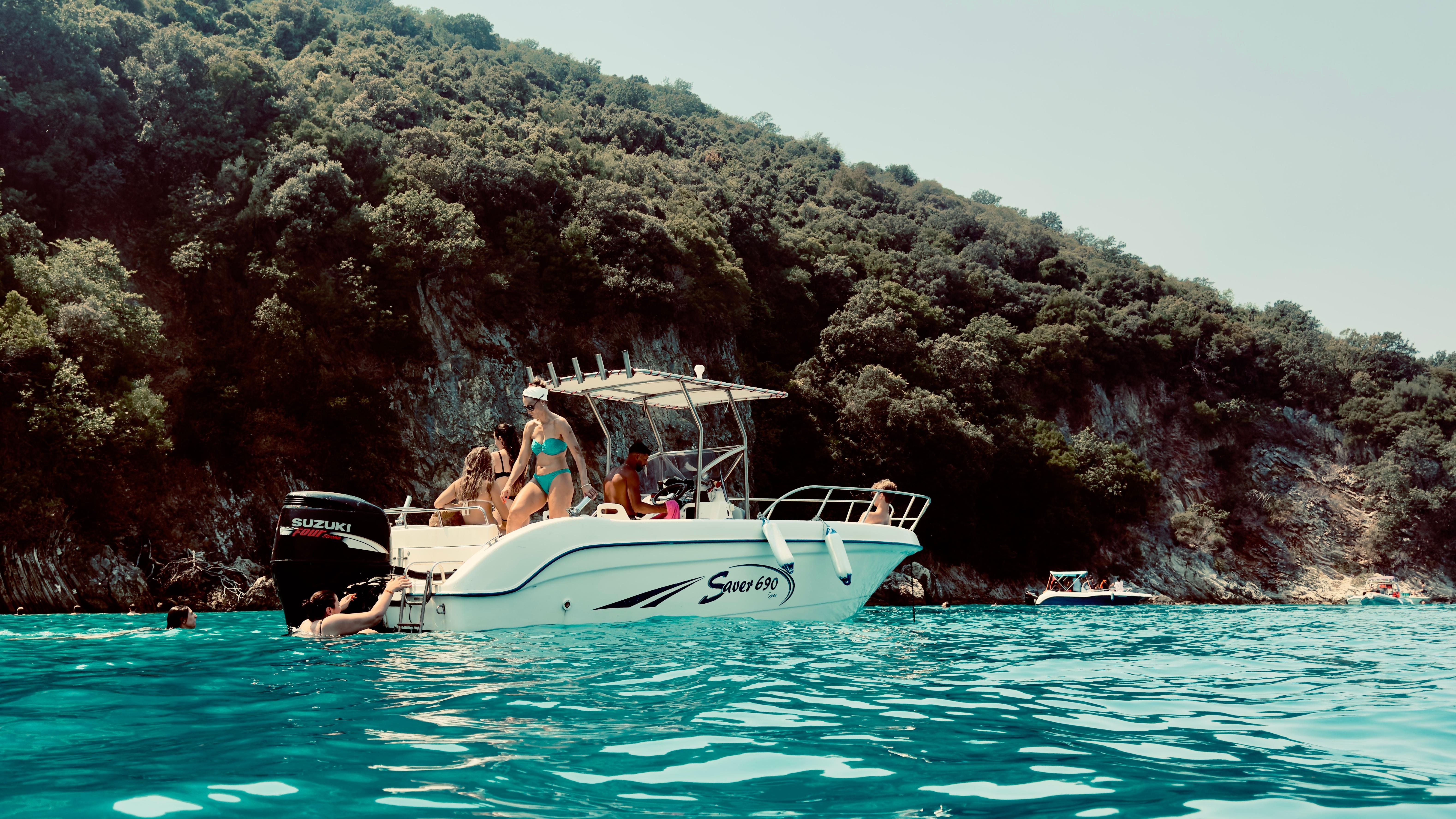
Sail the breathtaking Albanian coast, snorkel in turquoise waters, and explore secret caves and pristine beaches.
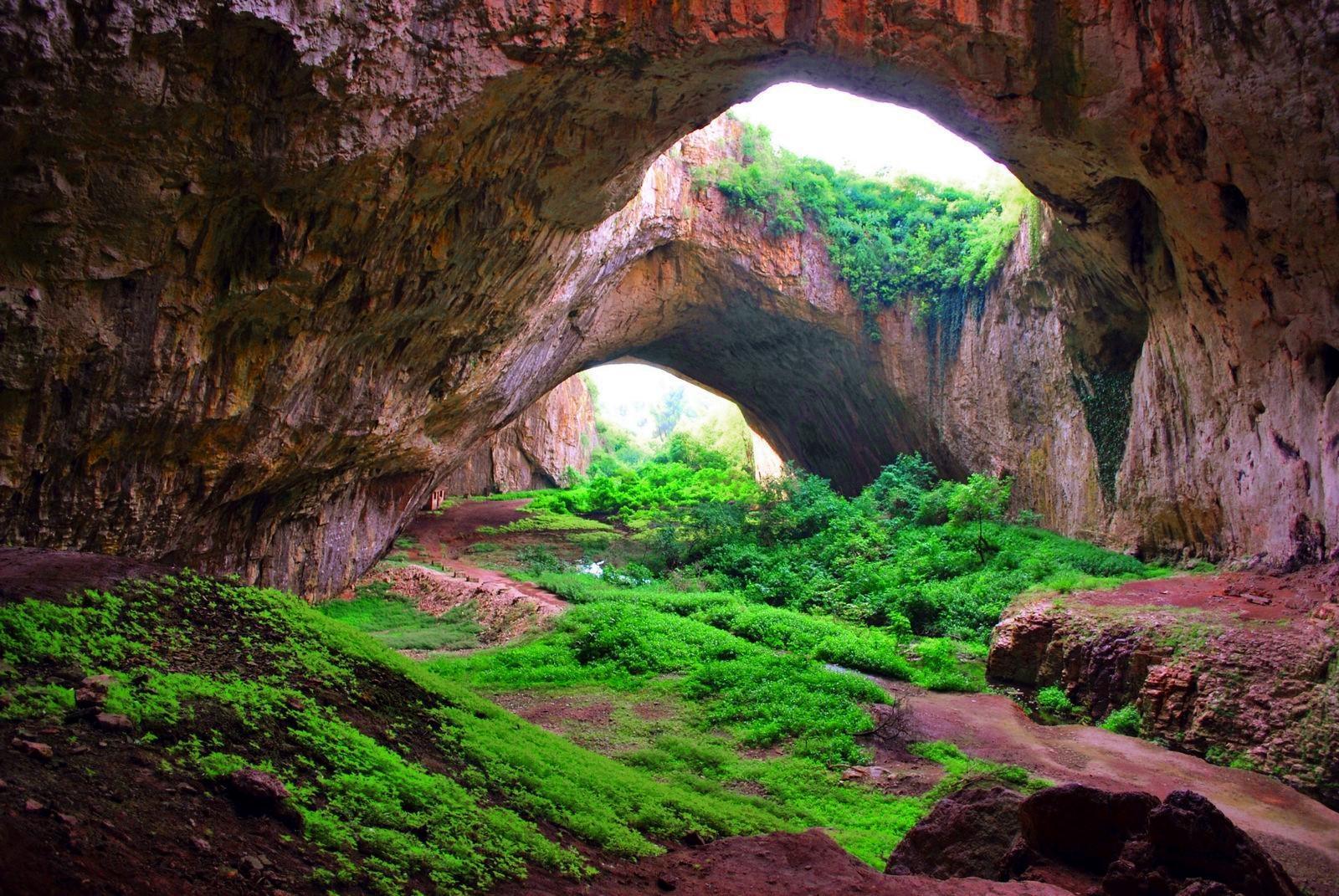
The central chamber spans 2,400 square meters and reaches 100 meters in height at its peak.
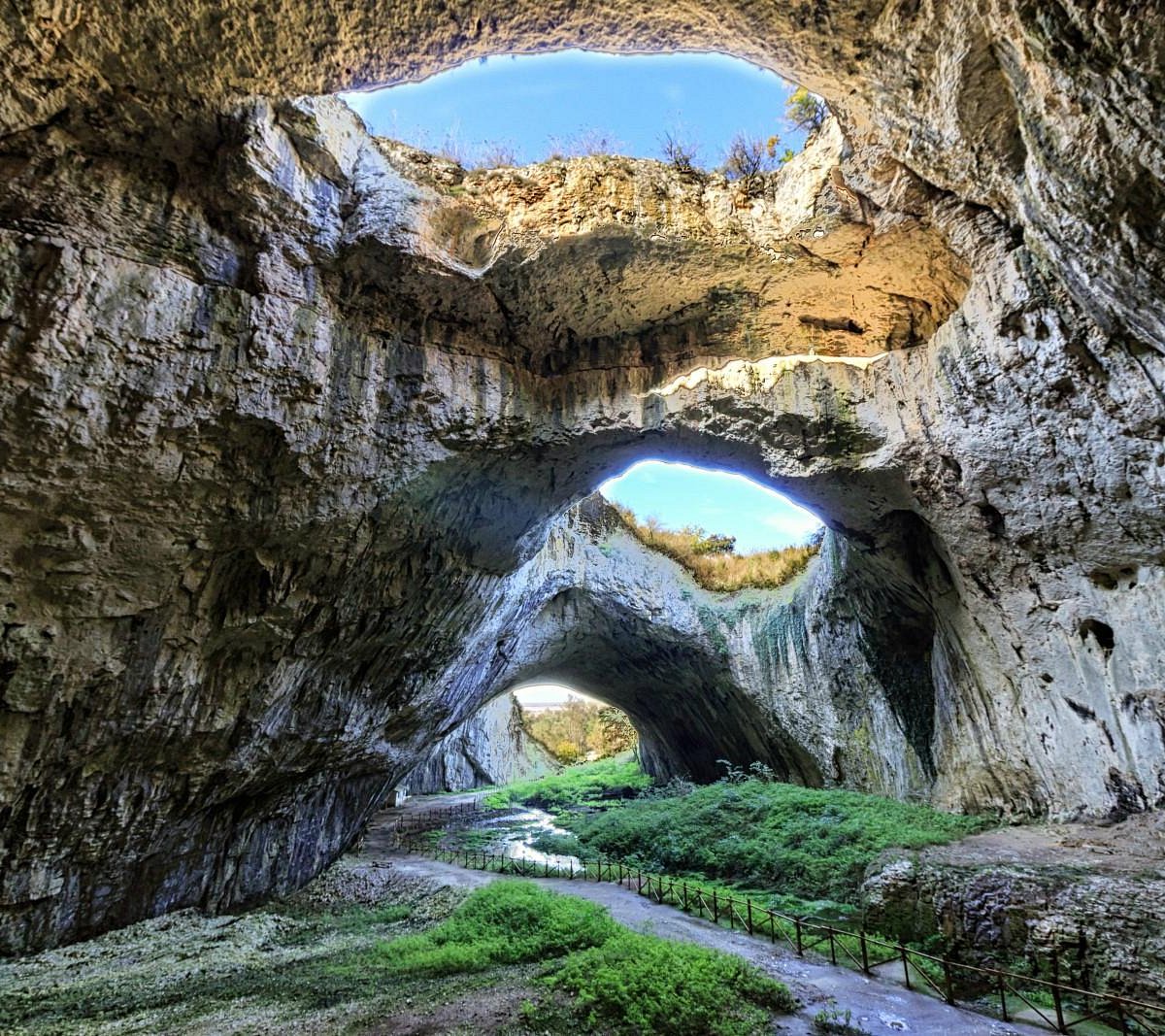
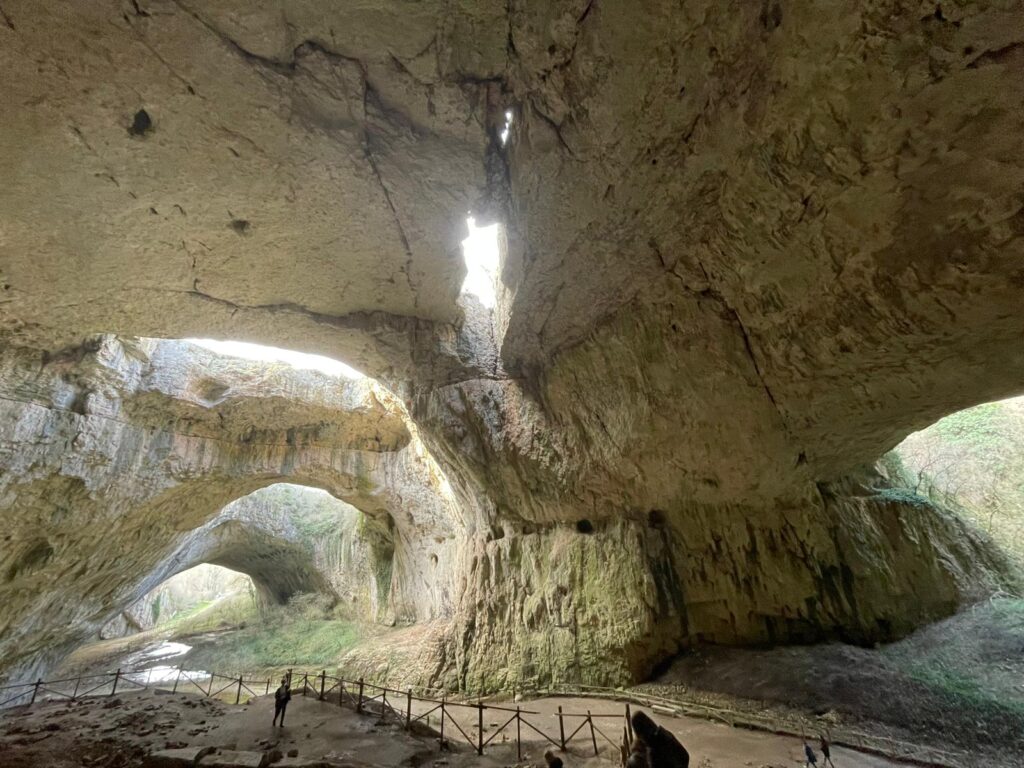
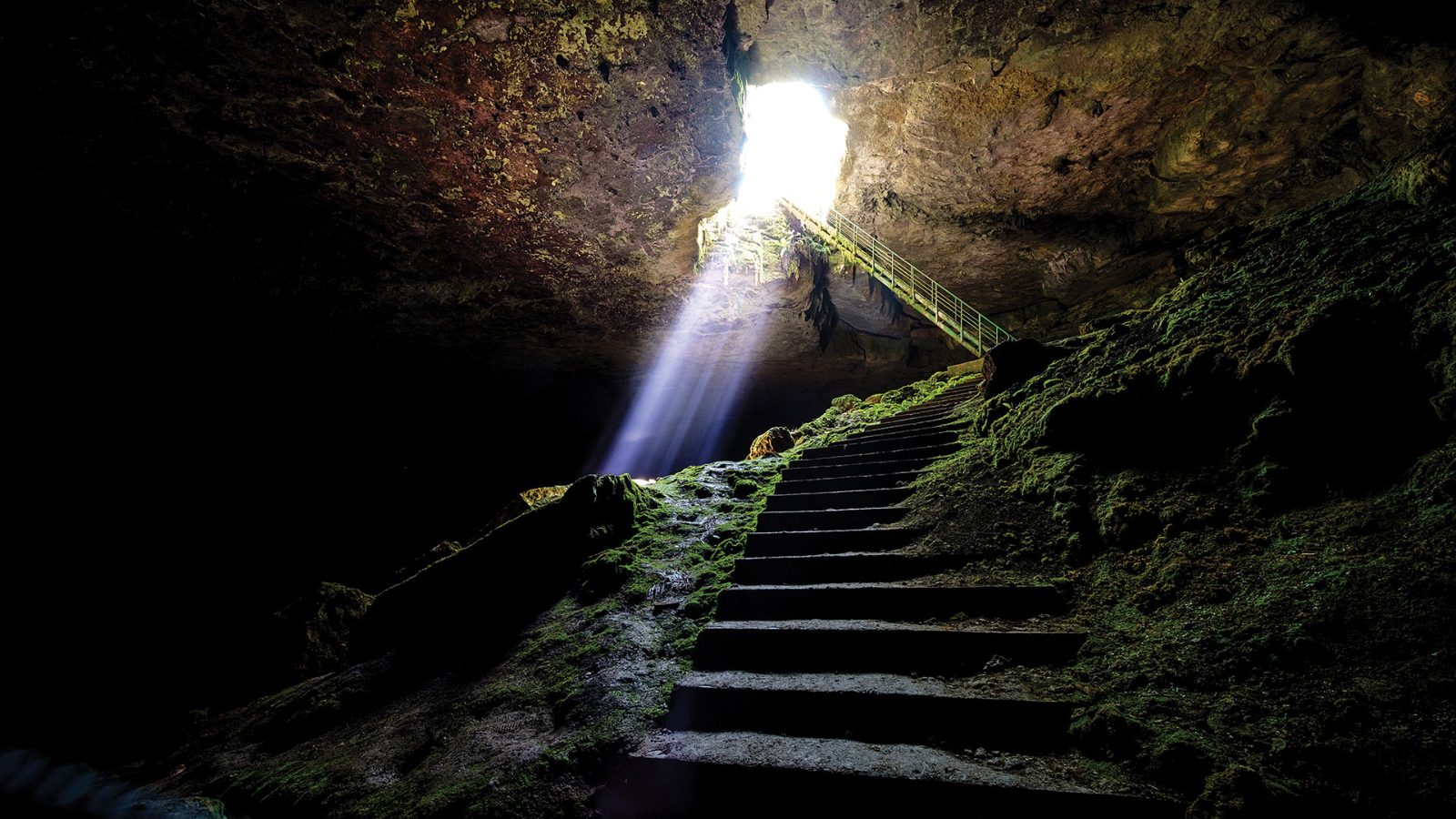
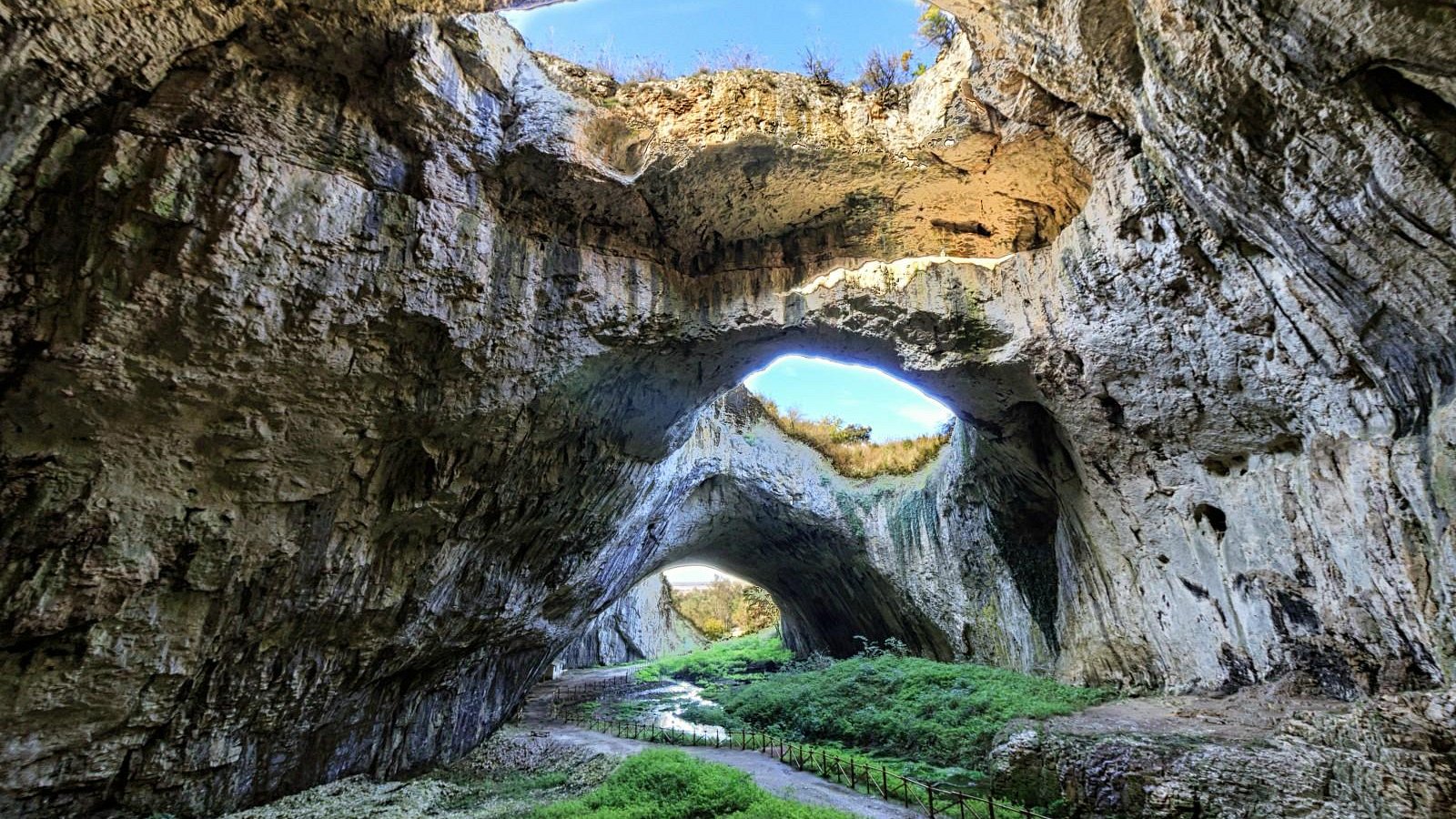
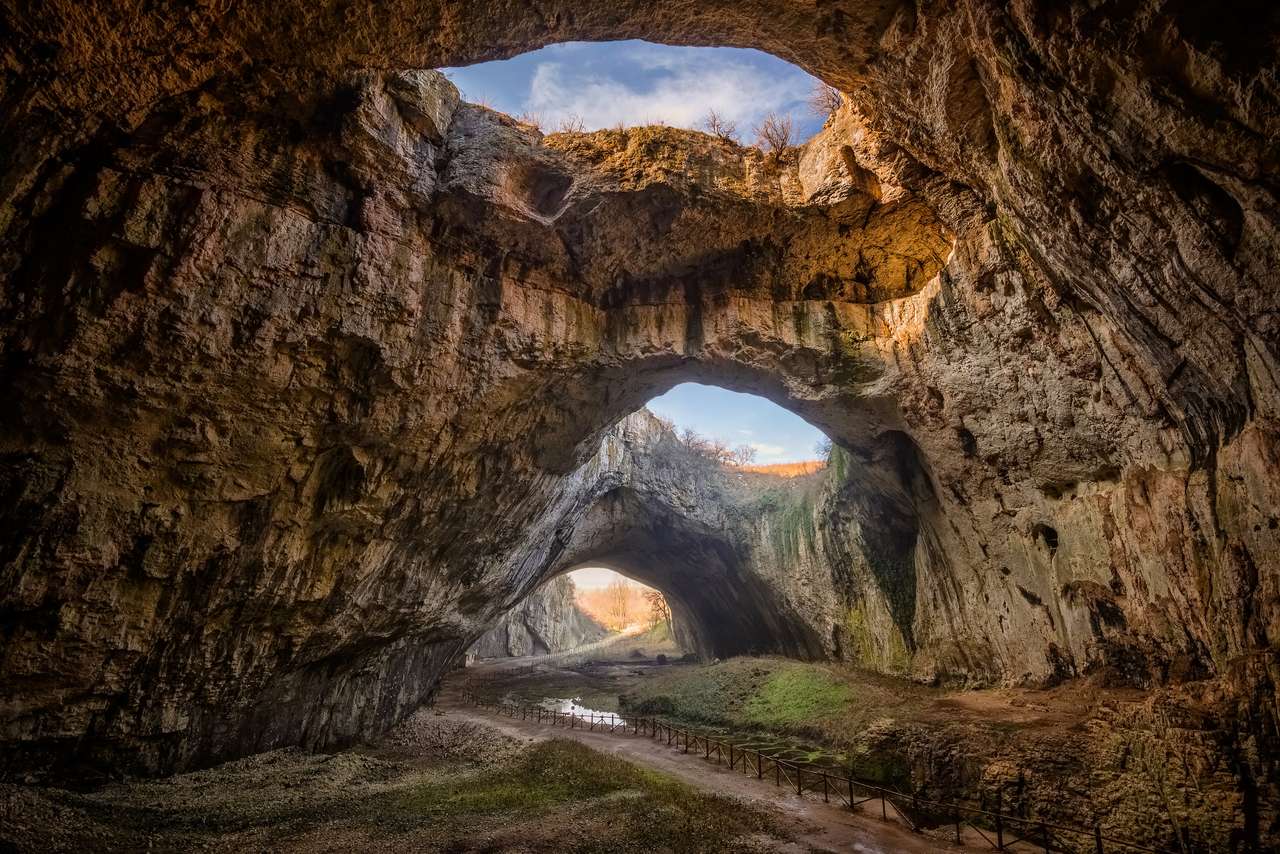
These circular holes in the ceiling illuminate the dark cave interior with natural light.
A small river flows through the left gallery, creating a unique habitat within the cavern.
The cave served as a secret storage facility during the 20th century.
The cavern serves as a vital home for over 30,000 bats across 15 different species.
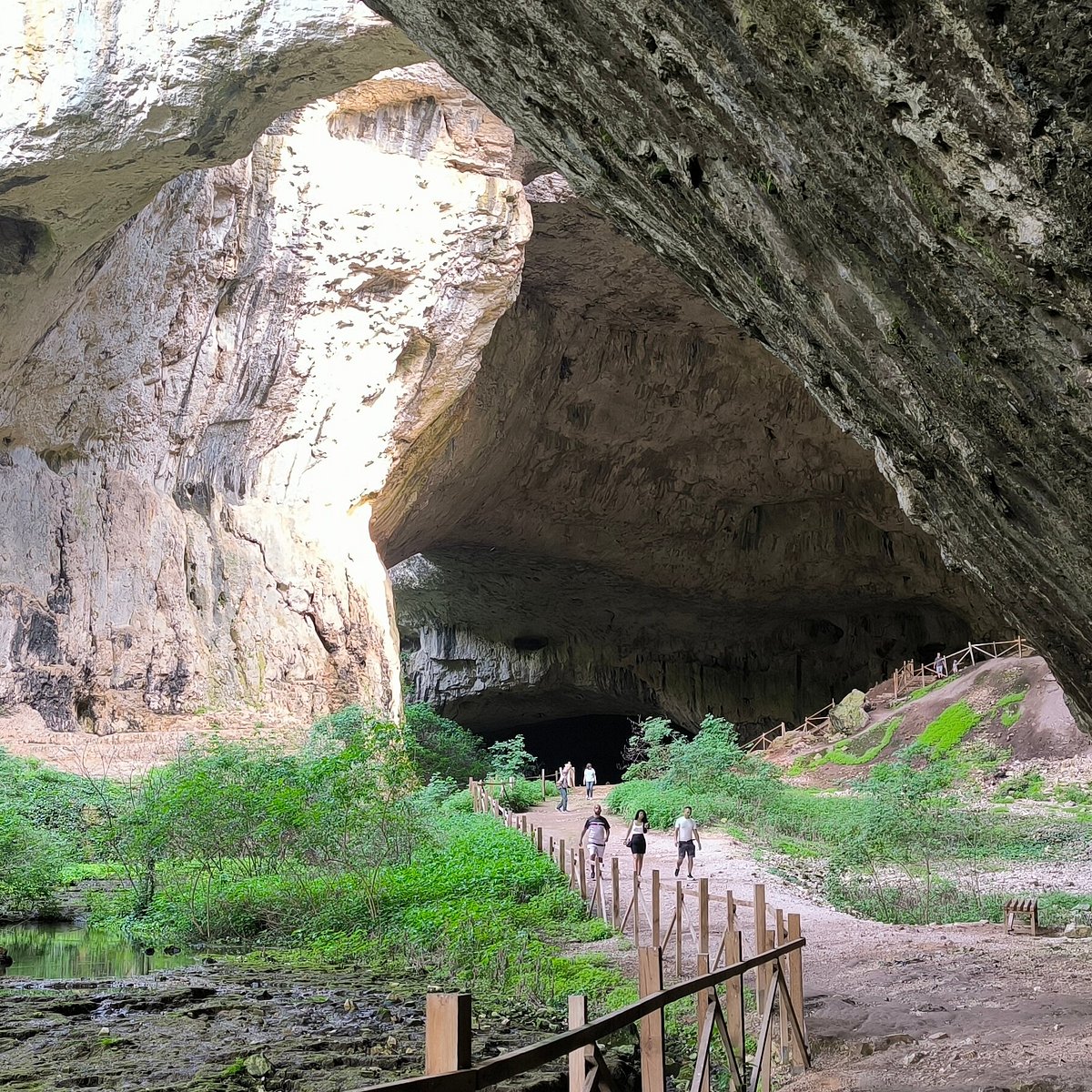
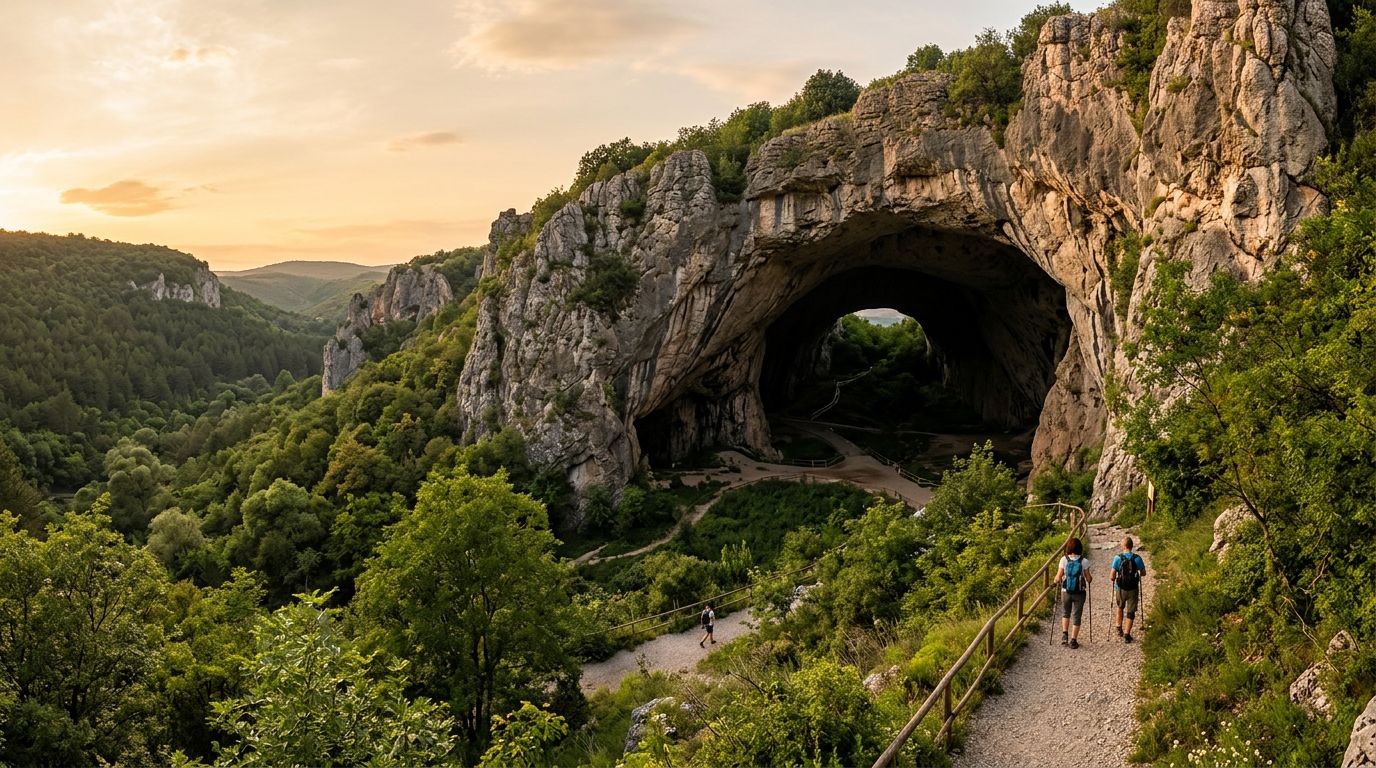
You arrive at the Devetaki plateau by mid-morning, when the light slants through the cave's seven openings and illuminates the first thirty metres of the main gallery. The entrance path descends through a meadow dotted with wild thyme; swallows nest in the rock face above.
Inside, the temperature drops to fourteen degrees. You walk the marked trail along the southern wall, passing the alcoves where tenth-century monks carved their sleeping niches into the limestone. The deeper you go, the louder the ultrasonic clicks of the bat colonies echo from the vaulted ceiling. A wooden platform at the gallery's midpoint offers a view back toward the entrance arches, where the morning sky frames the meadow in three separate windows.
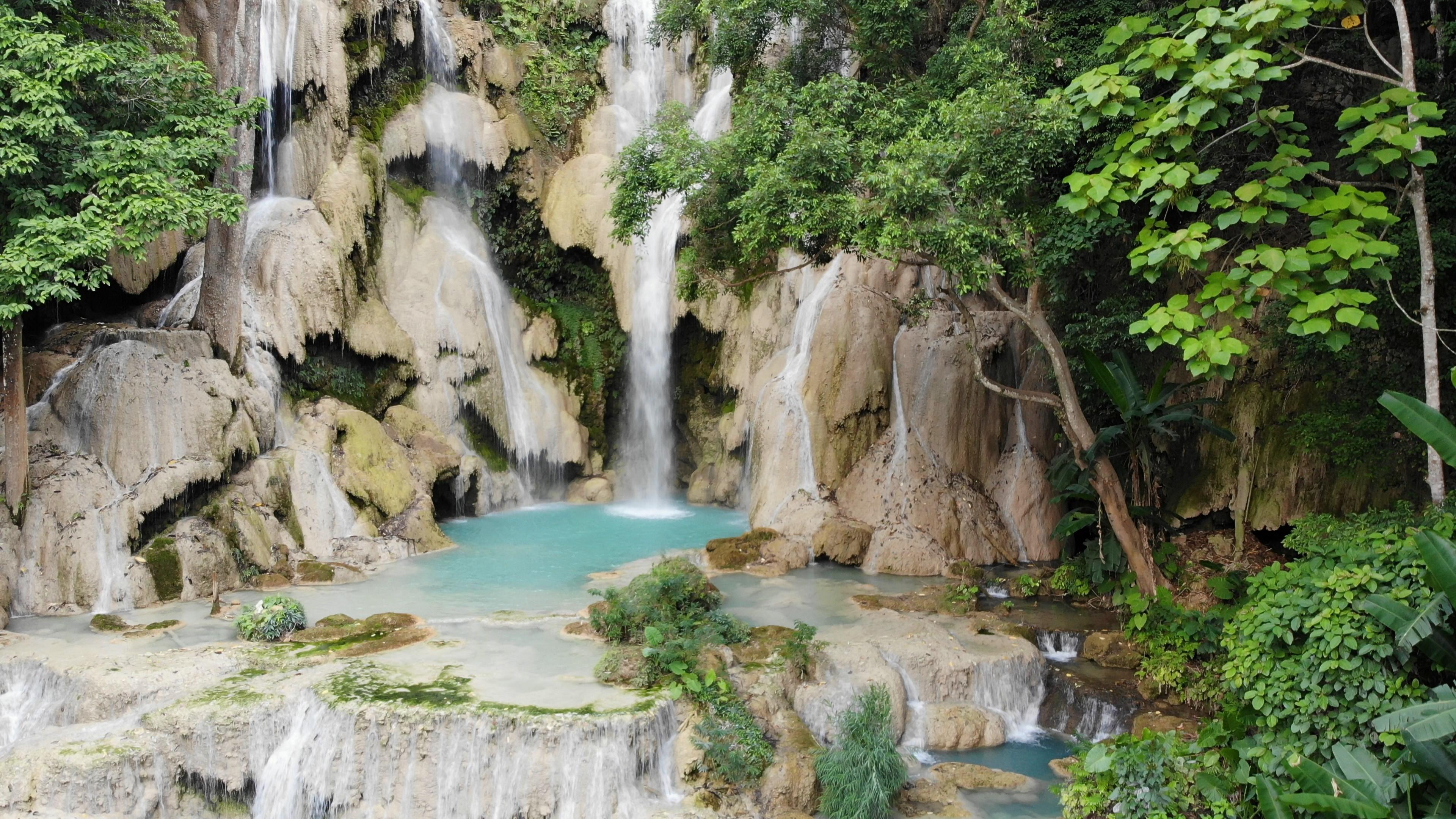
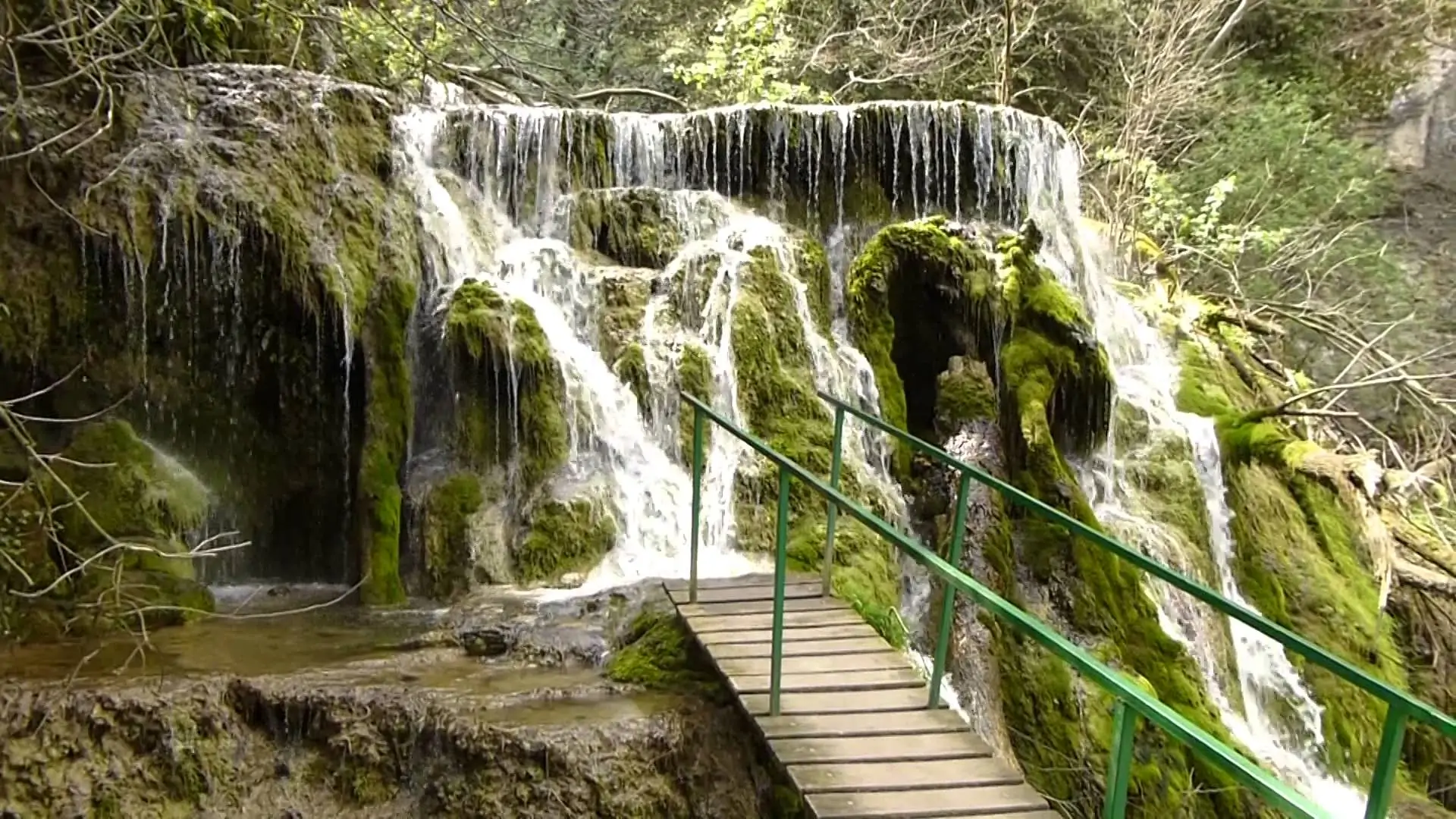
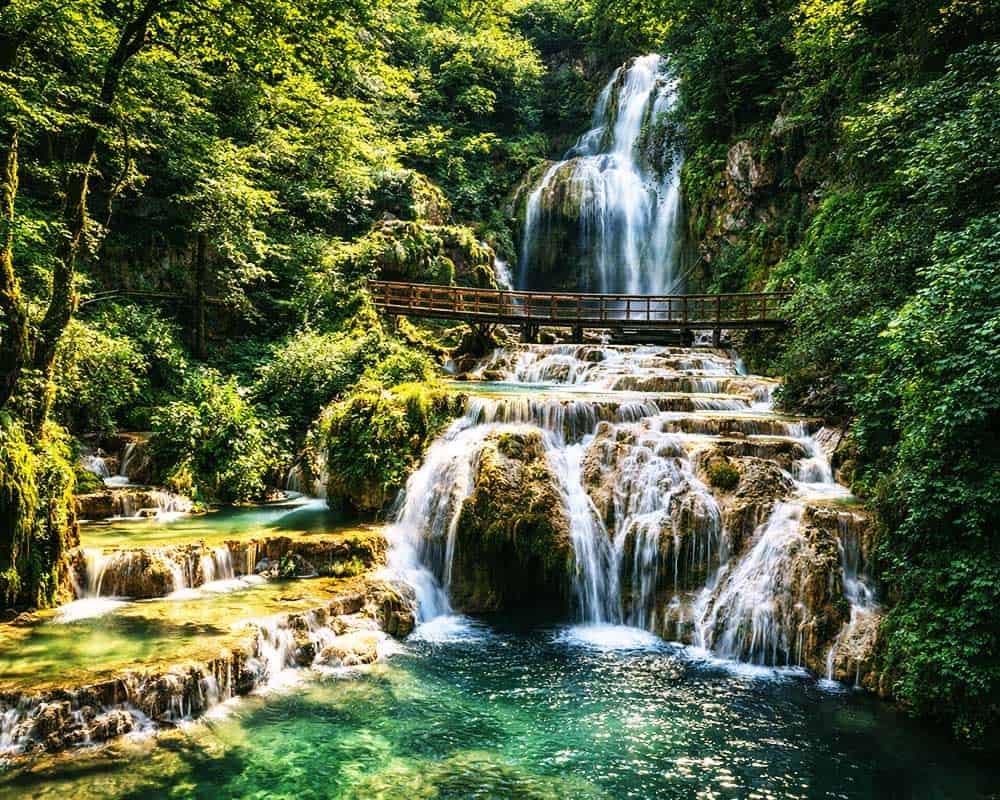
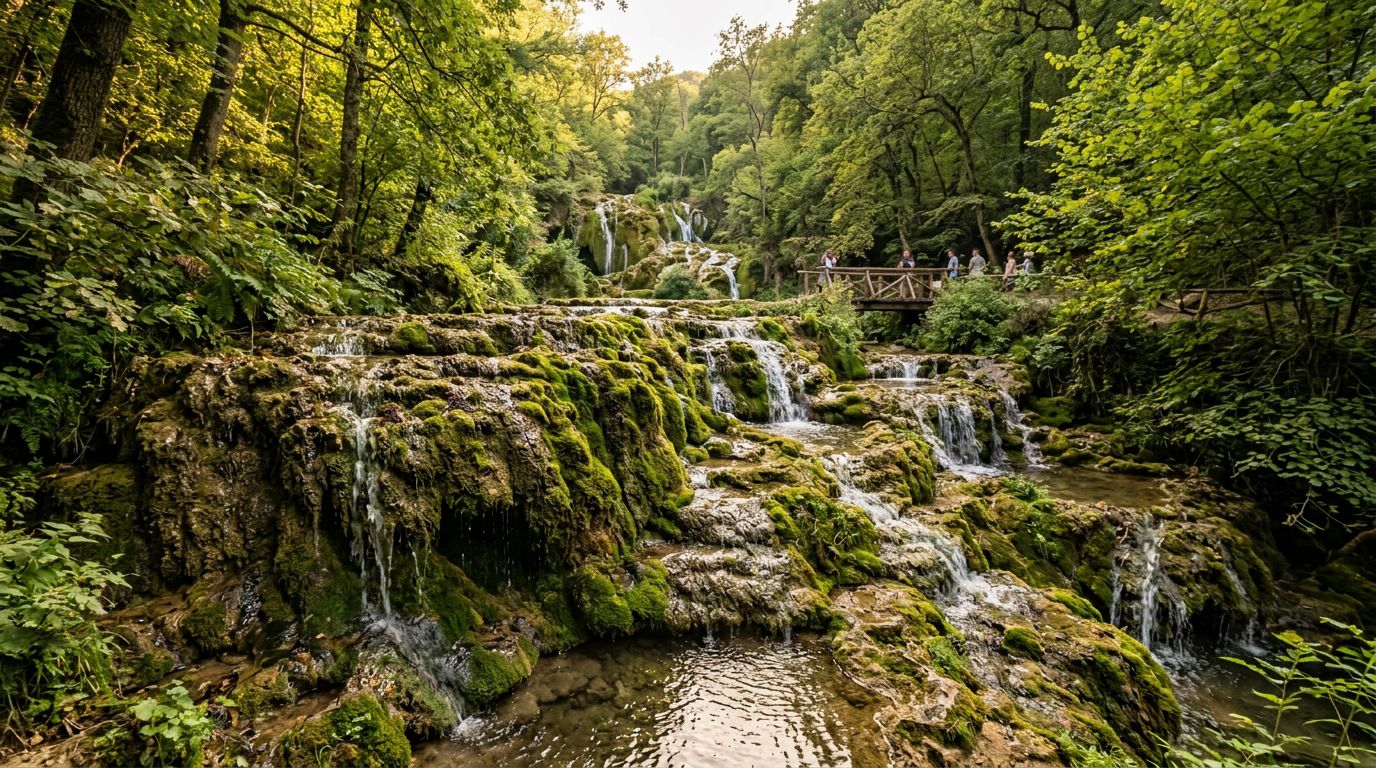
After an hour you drive west to Krushuna. The trailhead begins at a small parking area; you follow the boardwalk upstream, crossing the Maarata River three times as it splits around moss-covered boulders. The first cascade appears after two hundred metres: a five-metre drop into a turquoise pool ringed by maidenhair ferns. The walkway climbs alongside the main fall, close enough that spray wets the handrail. At the upper spring, the river emerges directly from the cliff face, cold and clear. You retrace the loop through beech shade, the sound of falling water constant.
All the details about your upcoming adventure in one place
This devetaki cave and krushuna waterfalls tour combines two of Bulgaria's most striking natural landmarks in a single day excursion from Sofia or Plovdiv. The karst cave system shelters seven entrances and houses one of Europe's largest bat colonies, while the cascading turquoise pools of Krushuna create a serene forest oasis. Expert-guided devetaki cave and krushuna waterfalls tour tickets grant access to both geological formations, underground chambers, and riverside trails through protected conservation areas.
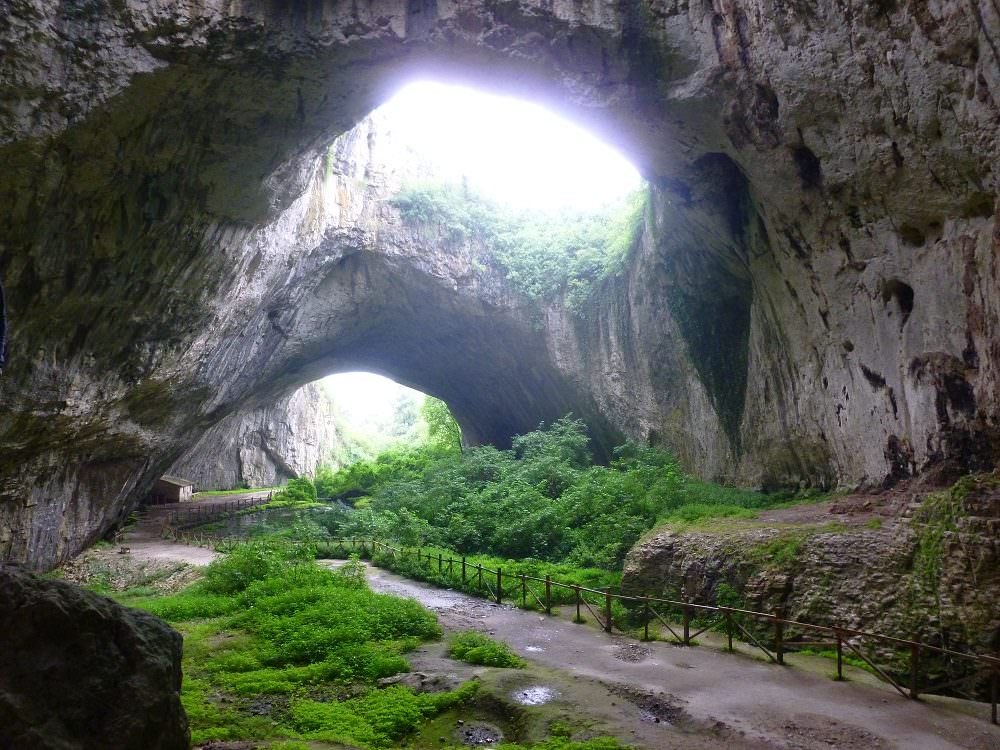
Devetaki Cave shelters seven entrances carved by the Osam River over fifteen million years, forming Bulgaria's largest cave hall: a vault 2,442 metres long and sixty metres high at its peak.
Paleolithic tools recovered from the sediment layers date human presence to 70,000 years ago, making the site one of Europe's longest continuously inhabited natural spaces. Roman inscriptions near the western mouth record a second-century garrison stationed to guard the Danube frontier road. Medieval monks built stone cells into the alcoves in the tenth century; Ottoman records mention the cave as a military depot. During the Cold War, the Bulgarian government converted the eastern galleries into a fuel reserve, sealing three chambers with concrete until 1996. Today the cave functions as a European bat sanctuary, home to thirty thousand individuals from fifteen species, including the greater mouse-eared bat and the endangered lesser horseshoe.
The Krushuna Waterfalls lie eleven kilometres west, where the Maarata River surfaces from a karst spring and drops thirty metres across twelve travertine terraces. The calcium carbonate deposits grow roughly two millimetres per year, building the pale green pools and fluted weirs that define the cascade architecture. Wooden walkways installed in 2003 thread through the spray zone, allowing close approach to the upper falls without disturbing the moss-covered formations. The forest canopy overhead—hornbeam, beech, and wild cherry—keeps the site cool even in July, and the water temperature holds steady at eleven degrees Celsius year-round. Most Sofia lovech devetaki cave and krushuna waterfalls tour itineraries pair the two locations because they share the same geological substrate: Jurassic limestone, fractured by the same tectonic event that tilted the Balkan range.
Both sites anchor the Devetashko Plateau, a protected landscape zone since 2011. The plateau's position between the Danube plain and the Pre-Balkan hills creates a biodiversity corridor; over two hundred bird species migrate through the airspace above the cave each spring. The conservation fee introduced in 2019 funds trail maintenance, bat monitoring, and seasonal access controls during winter hibernation. Visitor numbers have grown from twelve thousand in 2015 to over forty thousand in 2025, driven largely by Sofia-based day-trippers seeking caves waterfalls near me alternatives to the crowded Rila and Pirin parks. The devetaki cave and krushuna waterfalls tour circuit has become the default northern nature route, a six-hour loop that delivers two distinct ecosystems without multi-day logistics.

The cave's sixty-metre vault sheltered humans for seventy millennia, from Paleolithic hunters to Cold War strategists.
Wear sturdy, closed-toe footwear as paths inside the cave can be slippery and uneven. Bringing a light jacket is recommended for a devetaki cave and krushuna waterfalls tour, even in summer, due to the cooler temperatures inside the cavern.
There are no storage facilities at the site, so keep your belongings to a minimum. Security checks are minimal, but visitors on a devetaki cave and krushuna waterfalls tour are expected to follow marked paths to protect the fragile cave ecosystem.
Photography is highly encouraged, and natural light streaming through the ceiling holes provides excellent conditions. Avoid using heavy lighting equipment that could disturb the local bat population during your devetaki cave and krushuna waterfalls tour.
The site is suitable for older children, though parents should ensure younger children stay on the designated paths. A devetaki cave and krushuna waterfalls tour is generally a safe and educational outdoor experience for family groups.
The main entrance area is relatively flat, but the terrain inside the cave can be rugged and challenging for those with limited mobility. Visitors should note that the cave path is not fully paved or wheelchair accessible.
There are no food or drink facilities directly at the entrance or inside the cavern. Carry sufficient water and snacks with you before beginning your devetaki cave and krushuna waterfalls tour.
Opening hours
08:00–20:00
Address
Devetaki 5555, Bulgaria
Accessibility
Mostly flat walking path
Best arrival window
08:00–10:00
Bags policy
No lockers provided
Navigation
Follow marked trail from parking
Tickets for a devetaki cave and krushuna waterfalls tour are typically non-refundable once booked. Please confirm your specific tour operator's policy regarding the 3 BGN conservation fee.
Recommended time
4-6 hours
To experience a full devetaki cave and krushuna waterfalls tour, allocate roughly one hour for exploring the karst chambers of the cave and another two hours for the eco-trail through the limestone cascades. Combining these landmarks into a single day trip requires efficient transit between the sites, as foot traffic at the waterfall viewpoints tends to peak during the afternoon. Securing your devetaki cave and krushuna waterfalls tour tickets in advance ensures smoother entry, allowing more time to enjoy the travertine pools and lush forest canopy without rushing.
Crowd levels through the day
Devetaki Cave's recorded history begins around 70,000 BCE, when Neanderthal groups sheltered beneath its vaulted chambers during glacial advances. Archaeologists working between 1950 and 1953 uncovered flint tools and hearth remnants in the entrance gallery, establishing the site as one of Bulgaria's oldest continuously occupied refuges. By the Neolithic period—circa 6000 BCE—farming communities built semi-permanent dwellings near the cave mouth, leaving behind ceramic fragments and grinding stones that document the shift from nomadic to settled life. The devetaki cave and krushuna waterfalls tour route today passes directly over these excavated strata. Roman engineers surveyed the cave in the 2nd century CE, noting its three natural skylights and year-round water flow in logbooks recovered from the Pleven Archaeological Museum. No construction followed, but medieval records from 1346 mention hermit monks occupying the western alcoves, carving shallow niches for icons that remain visible on guided tours of the Devetaki formation. Ottoman cadastral maps from 1579 label the site "Deveteşik Mağara"—the nine-holed cave—cementing the name that persists in modern Bulgarian. In 1950, the Bulgarian People's Army requisitioned Devetaki Cave and sealed the entrance with reinforced concrete, converting the interior into a fuel depot for Soviet aircraft stationed at nearby Dolna Mitropoliya airbase. Engineers blasted side chambers to store aviation kerosene, destroying Chalcolithic wall paintings in the process. Declassified Ministry of Defense files from 1992 reveal the depot held 3.2 million liters at peak capacity. The military withdrew in 2007, and regional authorities opened devetaki cave and krushuna waterfalls tour access in 2011 after removing contaminated sediment. Conservation crews installed boardwalks in 2018 to protect the remaining archaeological layers, which UNESCO surveyed for potential World Heritage nomination in 2022. The three skylights—untouched since the Pleistocene—still illuminate the central hall at midday.
Neanderthal groups use Devetaki Cave as a seasonal shelter during Ice Age glaciations.
Neolithic farmers establish semi-permanent settlements at the cave entrance, leaving ceramic and grinding-stone deposits.
Roman surveyors document the cave's three natural skylights and perennial spring in official records.
Orthodox hermit monks occupy western alcoves, carving icon niches that survive today.
Bulgarian military converts the cave into a sealed fuel depot, storing aviation kerosene for Soviet airbases.
Regional authorities reopen the site for public tours after decontamination and archaeological assessment.
Conservation teams install protective boardwalks over excavated Neolithic and Chalcolithic strata.
UNESCO conducts preliminary evaluation for potential World Heritage status based on continuous occupation evidence.
Stand in the center of the vast cavern floor to capture the sheer scale of the karst formation and the massive limestone arches. This vantage point provides a wide-angle perspective of the seven circular ceiling openings that define the space during a devetaki cave and krushuna waterfalls tour.
Position yourself directly beneath the largest ceiling apertures where sunlight streams onto the cave floor, creating high-contrast illumination perfect for dramatic compositions. This location is a highlight for those utilizing devetaki cave and krushuna waterfalls tour tickets to document the interplay between shadow and brightness.
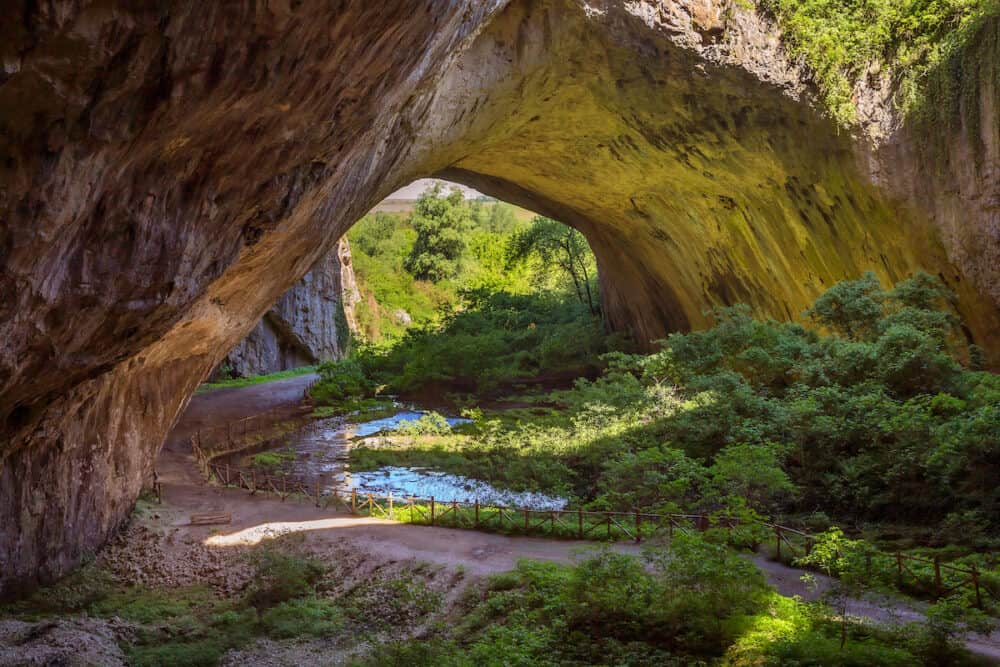
Capture the silhouette of the massive entrance from the inside, framing the lush greenery outside within the natural stone vault. This specific angle is a staple for visitors on devetaki cave and krushuna waterfalls tour tours who want to contrast the subterranean environment with the local landscape.
Walk along the wooden walkway near the Vit River flow that passes through the cave to include the water reflections in your frame. This spot offers a unique, lower-angle perspective on this Devetaki Plateau landmark for your devetaki cave and krushuna waterfalls tour.
Real experiences from real travelers
The devetaki cave and krushuna waterfalls tour exceeded expectations. Devetaki's entrance is among the largest cave openings in Europe, with cool air and echoing chambers. Krushuna's turquoise pools felt otherworldly. Wear sturdy shoes for the uneven cave floor
Combining these two Bulgarian natural sites made perfect sense. The limestone formations at Krushuna create dozens of small cascades, while Devetaki Cave shelters impressive stalactites and archaeological layers. Both locations were uncrowded on a weekday morning
The cave tour takes you through chambers where bats still roost in the upper vaults. Krushuna requires climbing wooden stairs between waterfall tiers. Both sites reward the effort with striking geology and fewer tourists than commercial attractions
Krushuna's waterfalls provide natural air conditioning in summer heat. The devetaki cave and krushuna waterfalls tour covers diverse landscapes within an hour's drive. Cave temperatures stay around 10°C year-round, so bring a jacket even in August
Devetaki's rock formations show millions of years of karst erosion. The Krushuna cascade system filters through porous travertine, creating that distinctive turquoise hue. Spring snowmelt increases water flow dramatically at both locations
Most foreign visitors skip northern Bulgaria entirely. The devetaki cave and krushuna waterfalls tour reveals why that's a mistake. Devetaki served as a Neolithic settlement, Roman fortress, and medieval monastery. Krushuna's accessibility improved with recent trail maintenance
The interplay of light and limestone creates compelling compositions. Devetaki Cave's entrance arch frames the valley perfectly at sunrise. Krushuna's moss-covered rocks photograph best with polarizing filters to cut water glare. Midday sun illuminates the cave interior naturally
Our guide explained the cave's role as a prehistoric dwelling and Cold War-era military depot. At Krushuna, wooden platforms let you approach the falls without damaging fragile travertine. The devetaki cave and krushuna waterfalls tour requires moderate fitness for stairs and uneven paths
Both natural sites are visually striking. Devetaki Cave lacks interior lighting, so headlamps are essential for exploring beyond the entrance chamber. Krushuna has minimal signage in English. Plan for limited food options between the two locations
The Osam River valley connecting these attractions passes through quiet villages and limestone cliffs. Devetaki's archaeological significance becomes clear when you see tool marks in the rock. Krushuna's cascade pools invite wading on hot afternoons
Everything you need to know for your journey
Devetaki Cave is open daily from 08:00–20:00. The entrance fee is 3 BGN (conservation fee, per person). The cave is closed annually from June through July for bat breeding. Most visitors spend about 1-2 hours on-site during a devetaki cave and krushuna waterfalls tour. The site is open to all ages, provided children remain on marked paths. While you can purchase entry at the gate, many prefer booking a guided devetaki cave and krushuna waterfalls tour to handle logistics. Aim to visit between 08:00–10:00 to avoid mid-day crowds and get the best light. Yes, photography is allowed and highly recommended for capturing the natural light. Simply drive toward Devetaki village and follow the signs to the parking area near the cave entrance.
Please contact us for more information.
Join thousands of happy travelers who have discovered this incredible experience
Book Your Experience Now